
Simple Fine Motor Activities With Everyday Materials
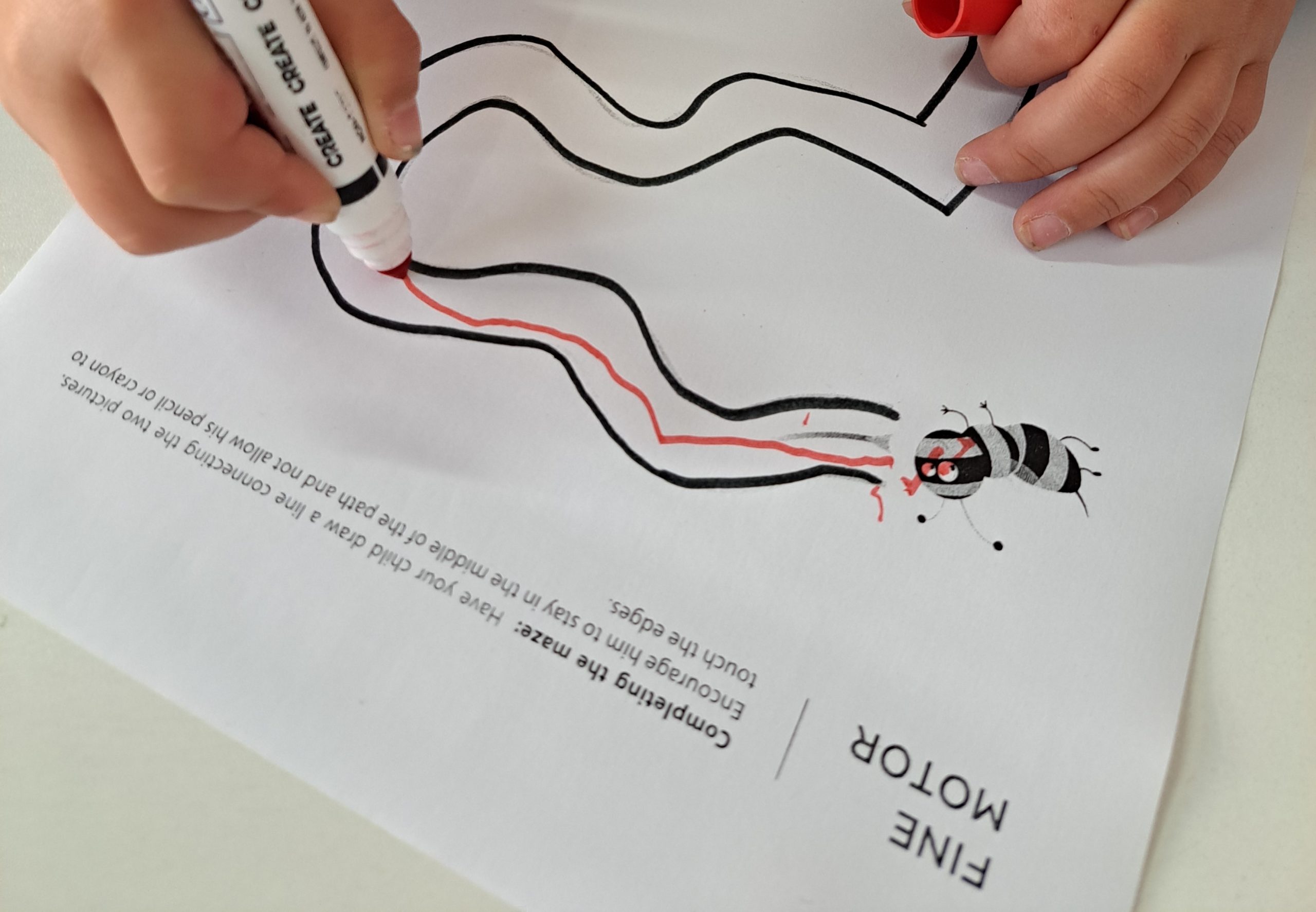
You don’t have to go out and buy a bunch of special tools to help your kids develop fine motor skills. You already have a lot of tools at home or in your desk drawer.
Paper Clips
Kids can add paper clips to a small piece of heavy paper or cardstock. Use them for counting activities or as a scorecard for a dice game. If you have colorful paper clips, you can use them for color sorting or patterning activities.

Binder Clips
Kids can add binder clips to a piece of paper, cardstock, or popsicle stick. Colorful binder clips create a little more interest and can be used for color matching and patterning activities.

Hole Punch
My favorite office supply/fine motor tool is a hole punch. Kids love hole punch activities! They can make open-ended designs by punching holes into paper or index cards. They also enjoy adding holes to printables.

Stapler
My second favorite fine motor tool in my desk drawer is a stapler. Let kids staple scrap paper together to make these mini-books. They can use a stapler to attach things to paper in their art projects and collages.

Rubber Bands
Challenge your kids to place rubber bands around cans, plastic cups, pool noodles, or paper towel rolls.

Reinforcement Labels Or Dot Stickers
Use these fun stickers for art activities, color sorting, counting activities, or patterning activities.

Pushpins
Kids can poke holes into lines, letter cards, or other images.

Envelopes
Let kids “write” letters and stuff them into envelopes. If you don’t want to use your stash of envelopes, save and recycle envelopes that you get in the mail.

Crumbling Paper Activities
Squeezing paper into balls also gives kids an opportunity to build hand strength. They find crinkling paper so much fun. It’s a sensory activity as well as hand strengthening.
Fill a tub with paper and encourage kids to crumple it up to make a “paper ball sandbox.” They can make balls for a snowball fight. They can also ball up a sheet of foil to make moon rocks. Encourage your child to use the paper in your recycling bin. They can squeeze and crumble paper to make “snowballs”. Add an ice cream scoop from your kitchen drawer and they can scoop up some pretend ice cream.

Tape
Kids also love using tape. Let them use it to create art, to “fix” things. Use masking tape as a resist for painting projects like spray bottle painting or squirt gun painting.

Glue Activities
Using glue is another simple hand-strengthening activity to consider.
Okay….some kids REALLY love squeezing glue from a bottle and may be tempted to use LOTS and LOTS of glue. Just remember that as they are squeezing, they are building hand strength.
Give kids opportunities to make dots and lines and squiggles with glue. Try colored or glittery glue to mix things up a little bit. Some kids also enjoy cutting and pasting activities.

Tearing Paper Activities
Provide some paper and show kids how to tear the paper in half or into tiny pieces. Then, you can use torn paper collages or torn paper art projects.

Playdough Activities
Playdough is a very motivating tool to build hand strength.
Using playdough provides an opportunity for them to practice smooshing, squeezing, pinching, and rolling motions. There are also endless ways to create playdough activities for your kids.

Sponge & Washcloth Activities
Soak sponges or washcloths in water until they are completely saturated. Then, encourage kids to squeeze out all of the water from the sponge or washcloth.
You can make it a game by showing them how to soak up the water in one container and then transfer it by squeezing it into another container. You can challenge your kids to see how quickly they can move the water

ALL CREDIT TO: www.earlylearningideas.com for photos and information. Please visit their website and resources store.